The short answer is no. Past cycles offer points of comparison, but they cannot date a market bottom. In an article published on November 16, 2026, at 18:06 (UTC+8), Biteye examined whether Bitcoin’s decline was nearing its end after BTC fell as low as $62,006 on November 15—nearly half its October 2025 peak.
What does the cycle comparison show?
Biteye put the declines from the peaks of the 2013, 2017 and 2021 cycles at approximately 85% over 406 days, 84% over 364 days and 77% over 366 days, respectively. By the article’s publication, more than 13 months had passed since the reported October 2025 peak. That places the current decline in a time range comparable to those earlier bear markets, but the three examples do not establish when—or at what price—this one will bottom.
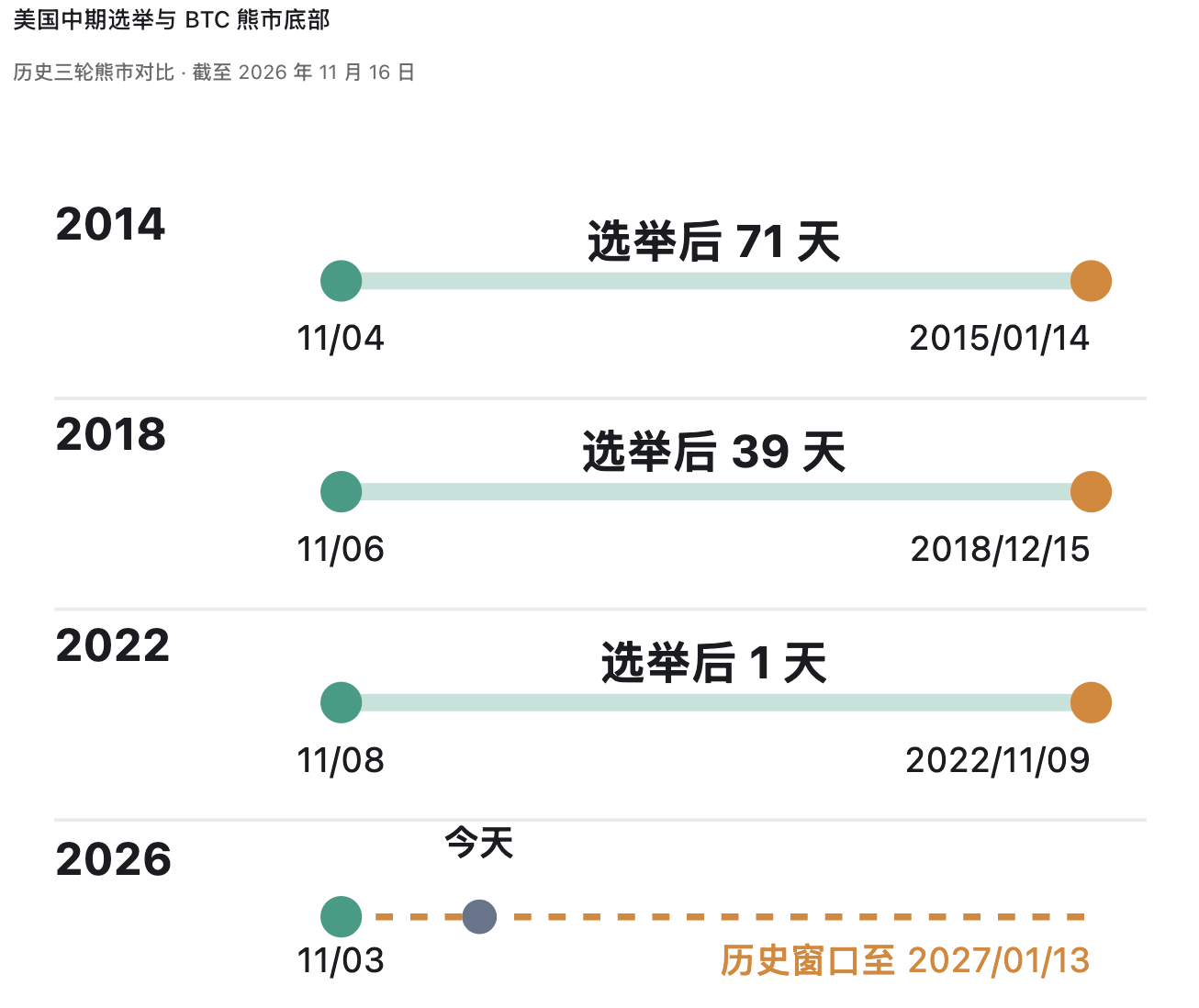
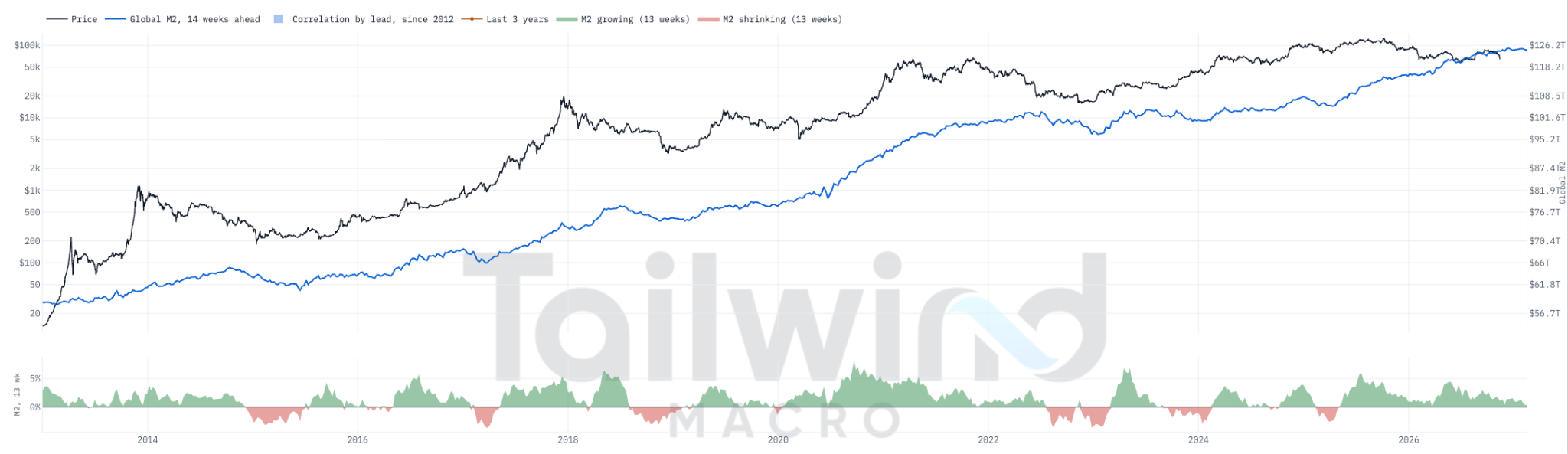
Biteye also considered three possible timing signals. It said recoveries in the prior three cycles began roughly 272, 404 and 462 days before a halving, and used that pattern to suggest January–July 2027 as a possible recovery window. It noted that the 2015, 2018 and 2022 Bitcoin bottoms fell 1–71 days after US midterm elections. Finally, citing Coinbase research, it said turning points in global M2 had typically led BTC by about 110 days, making the first quarter of 2027 another period to watch. These are historical comparisons and model-based windows, not forecasts that a recovery must occur.
What could make this cycle different?
The article reported approximately $1.91 billion in net outflows from US spot Bitcoin ETFs over seven consecutive trading days through November 13, alongside an approximately $11.5 billion decline in major stablecoin supply over the preceding 30 days. It also described a tighter macroeconomic setting, including a US 10-year Treasury yield near 5.15%. Those conditions matter because a familiar cycle pattern does not, by itself, supply buyers or ease financing conditions.
CZ listed ETF outflows, macroeconomic pressure, security concerns and regulatory uncertainty among possible contributors to the fall. He also raised speculation that investors might sell assets to fund a potential Anthropic IPO; the article did not establish that this had happened. Biteye added other possible pressures, including concerns about centralized-platform security and longer-term cryptographic risks. None was demonstrated to be a definitive cause of the price decline.
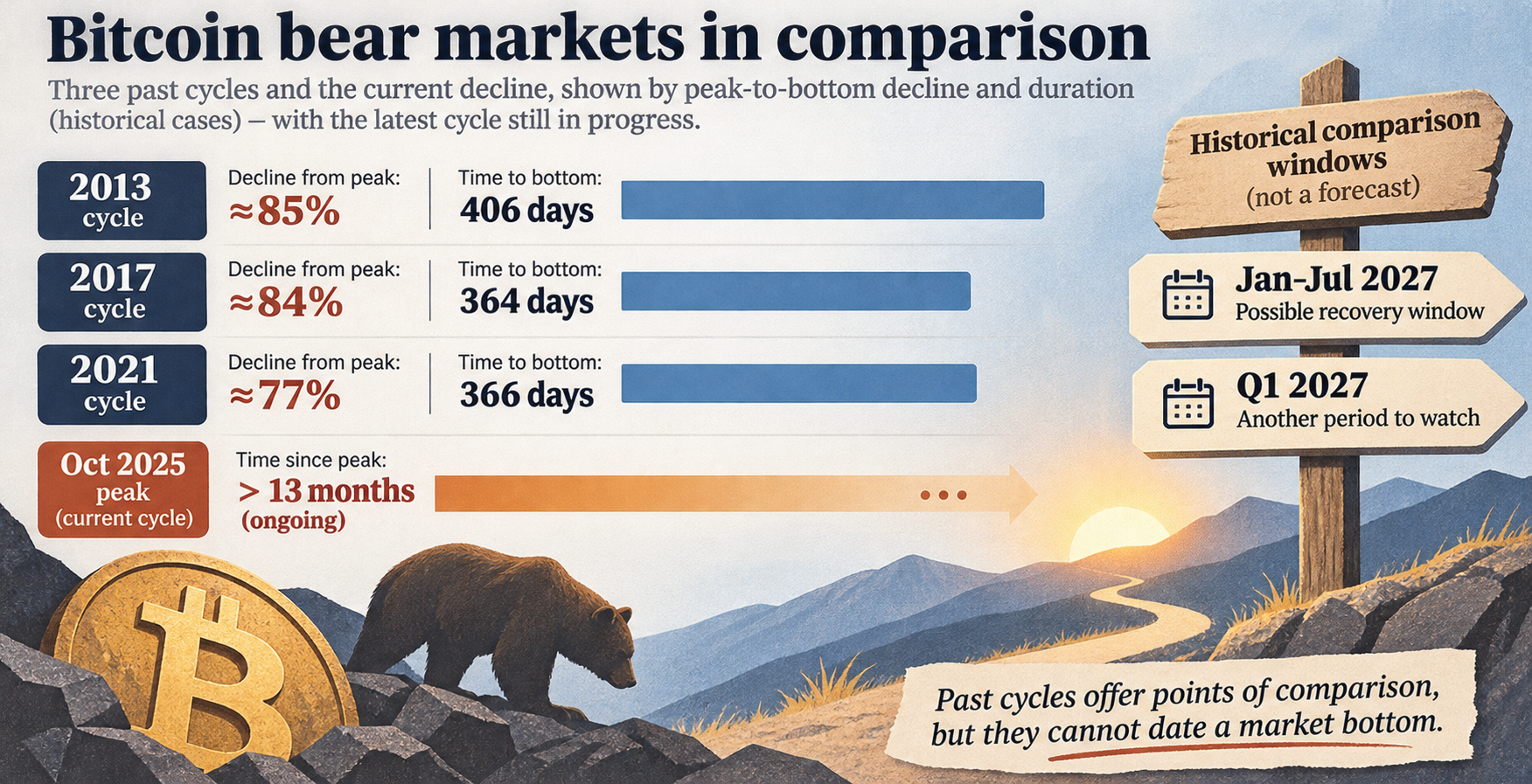
Biteye’s overall judgment was that late 2026 through the first half of 2027 was a likely window for completing a bottom and establishing a new cycle. The useful distinction is between that conditional reading of history and a known outcome: the article itself identified monetary policy, equity valuations and shrinking crypto-market liquidity as reasons a recovery could take longer.
Source: techflowpost.com (originally published 2026-11-16 18:06 UTC+8)