November 28, 2026, at 01:50:15 UTC+08:00
Addresses holding 1,000 to 10,000 BTC ended November 21 with about 2.95 million BTC, up 121,117 BTC, or 4.29%, from September 30. Bitcoin’s price fell 29.5% over the same period. The balances show that more bitcoin sat in large addresses by the end of the period, but they do not establish that large investors bought that much bitcoin or that the decline had ended.
What the balances show
CryptoQuant’s November 27 report, supported by crypto lender CoinRabbit, found that balances in this group had fallen in seven of the previous nine fourth quarters. In the fourth quarter of 2025, they fell by nearly 203,000 BTC. The 2026 increase ran counter to that pattern, though the quarter was not yet over.
A purchase is one reason an address balance can rise. A transfer between addresses or a change in custody can produce the same result. Large traders also placed $366 million in buy orders in the derivatives market earlier in the week, but those orders do not establish how much bitcoin changed hands in the spot market.
The group’s unrealized profit fell from $124.7 billion at the end of September to $23.8 billion on November 21. Its unrealized profit margin narrowed from 33.9% to 5.7%. On a realized basis, CryptoQuant reported an average daily loss of $41 million for the quarter to date. Whale-sized deposits to exchanges rose to an average of 5,012 BTC a day in November, though a deposit is not necessarily a sale.
Does demand elsewhere confirm a recovery?
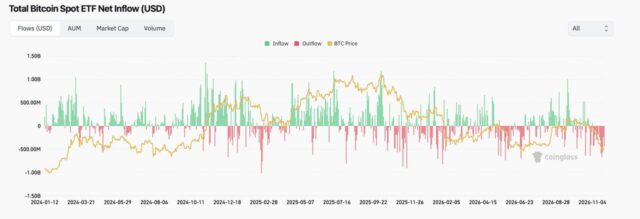
The evidence was mixed. Farside Investors recorded $453 million in net withdrawals from US spot Bitcoin ETFs on November 25, including $329.7 million from BlackRock’s IBIT. November 27 figures were not yet confirmed. CoinGlass data showed that withdrawals dominated recent sessions, in contrast to the substantial inflows earlier in the rally.
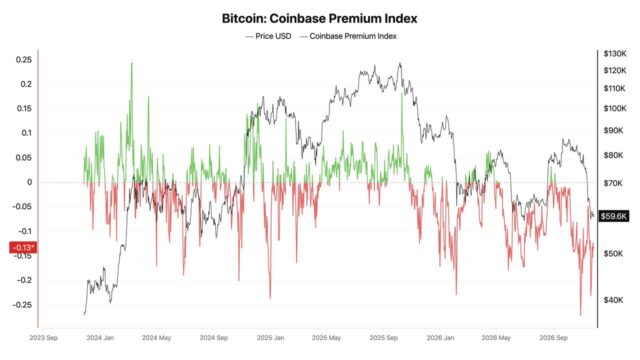
The Coinbase Premium Index, which compares bitcoin prices on Coinbase and Binance, stood at about −0.13%. Bitcoin was trading at a slight discount on Coinbase, suggesting weaker buying pressure there. Consistent ETF inflows alongside a sustained Coinbase premium would offer better evidence of a recovery in US demand than address balances alone.
Glassnode found that realized losses relative to capital inflows over the preceding year were the heaviest since the FTX collapse in 2022. Similar readings have occurred near past cycle lows, but they do not identify a bottom on their own.
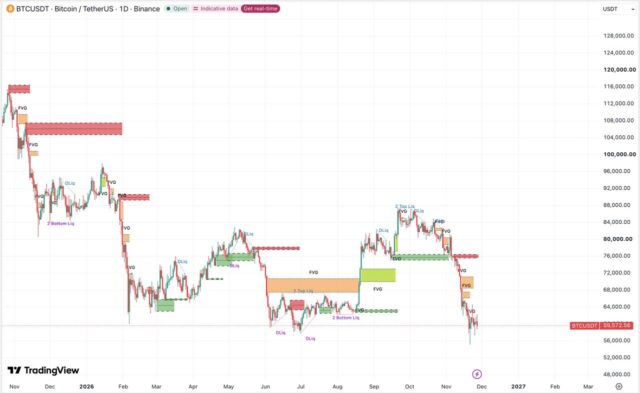
Bitcoin was trading near $59,600, and the daily chart still showed lower highs and lower lows. The analysis identified $63,000–$64,000 as the first resistance range, followed by $68,000–$71,000. A break below the recent low near $55,000 would weaken the case for a year-end rebound.
A recovery from that low before the end of 2026 remained possible, particularly if selling pressure eased and ETF flows turned positive. That is a narrower claim than a return to previous all-time highs. The rise in large-address balances was consistent with renewed buying, but it did not show that demand was strong enough to reverse the decline.