Original reporting date: November 13, 2026, 15:17 (UTC+8). This article summarizes a November 12 discussion with Cloud, chief analyst at HTX. The comparisons below are Cloud’s analysis, not a prediction.
Bitcoin has a scarcity case, but scarcity does not guarantee that its price will hold up when investors seek safety. That was Cloud’s central distinction in comparing BTC with gold and US Treasury bonds.
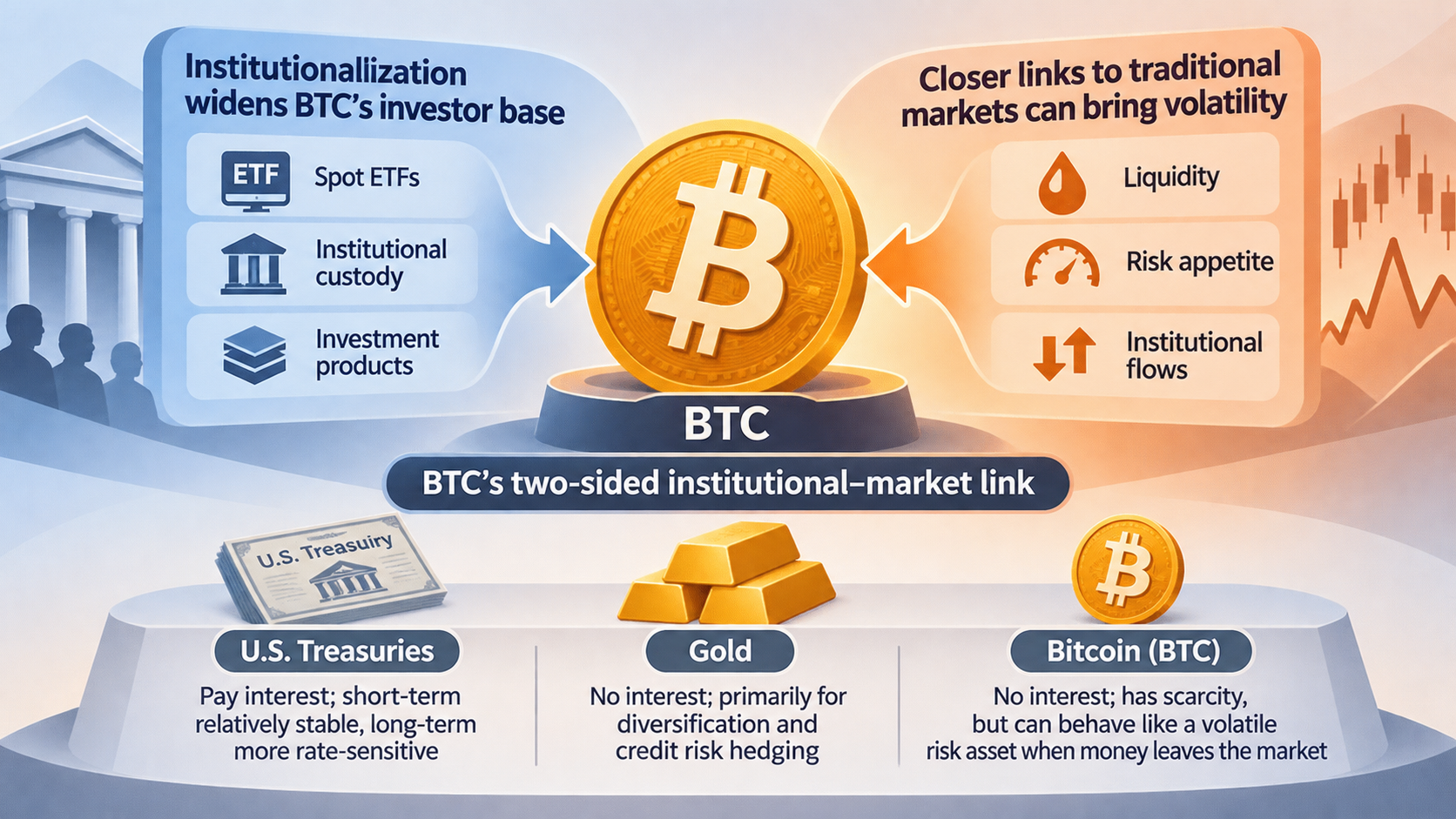
Treasuries pay interest. Gold and BTC do not, so higher bond yields raise the return investors may forgo by holding them. Cloud described short-term Treasuries as a relatively stable source of income, while noting that long-term Treasury prices are more sensitive to changes in interest rates. He framed gold primarily as a way to diversify and hedge credit risk, not as an asset that must rise in every downturn.
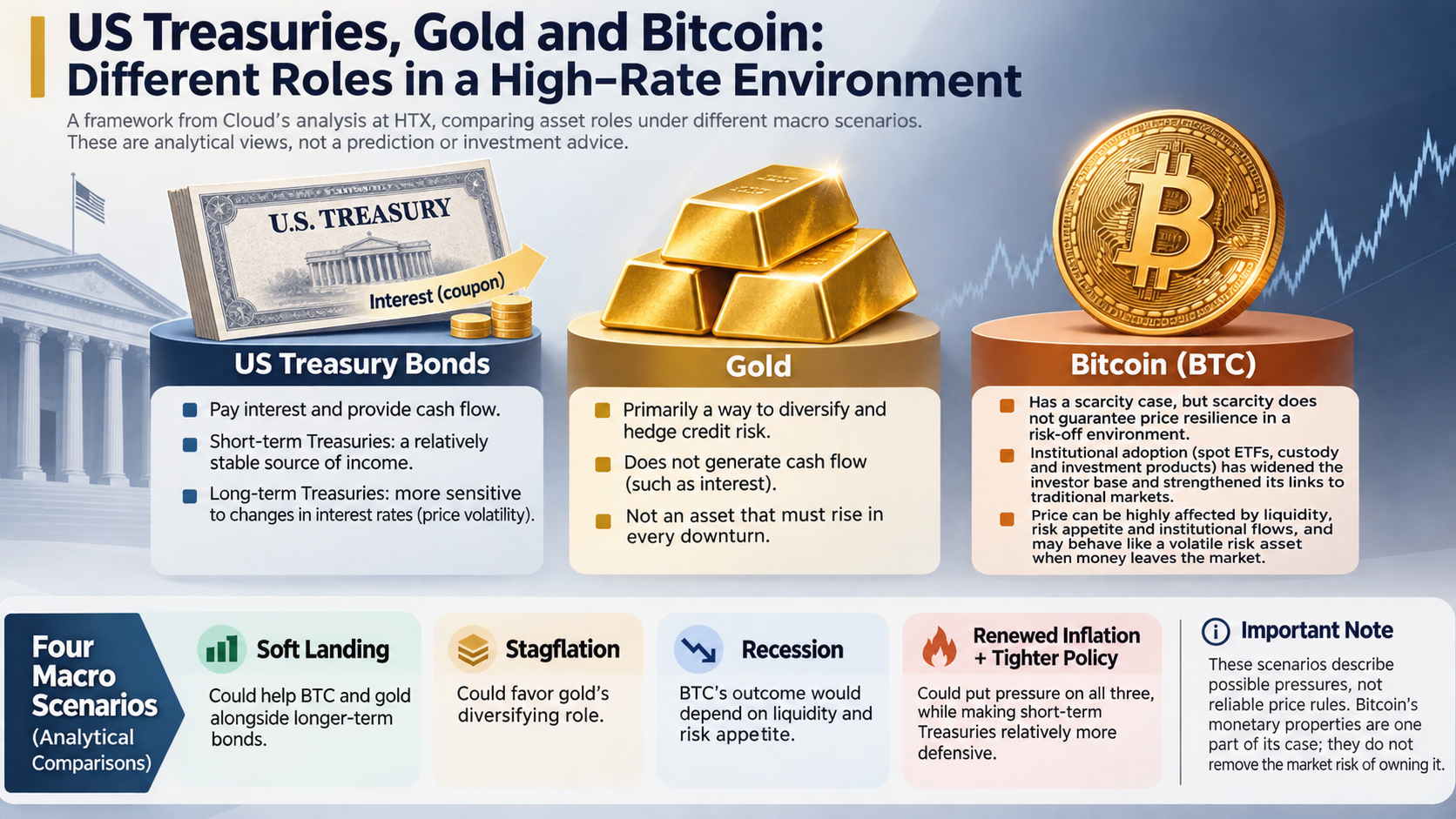
For Bitcoin, Cloud argued that spot ETFs, institutional custody and investment products have widened the potential investor base while also strengthening BTC’s links to traditional markets. In his view, liquidity, risk appetite and institutional flows can therefore matter greatly to its price. Even if an investor accepts Bitcoin’s long-term scarcity argument, BTC may still behave like a volatile risk asset when money leaves the market. Calling it “digital gold” does not settle how it will perform in a particular crisis.
Cloud used four conditional scenarios, rather than a single forecast, to test the comparison: a soft landing could help BTC and gold alongside longer-term bonds; stagflation could favor gold’s diversifying role; a recession would leave BTC’s outcome dependent on liquidity and risk appetite; and renewed inflation followed by tighter policy could put pressure on all three, while making short-term Treasuries relatively more defensive.
The limitation is that these scenarios describe possible pressures, not reliable price rules. Bitcoin’s monetary properties are one part of its case; they do not remove the market risk of owning it.
Source: techflowpost.com (originally published 2026-11-13 15:17 UTC+8)