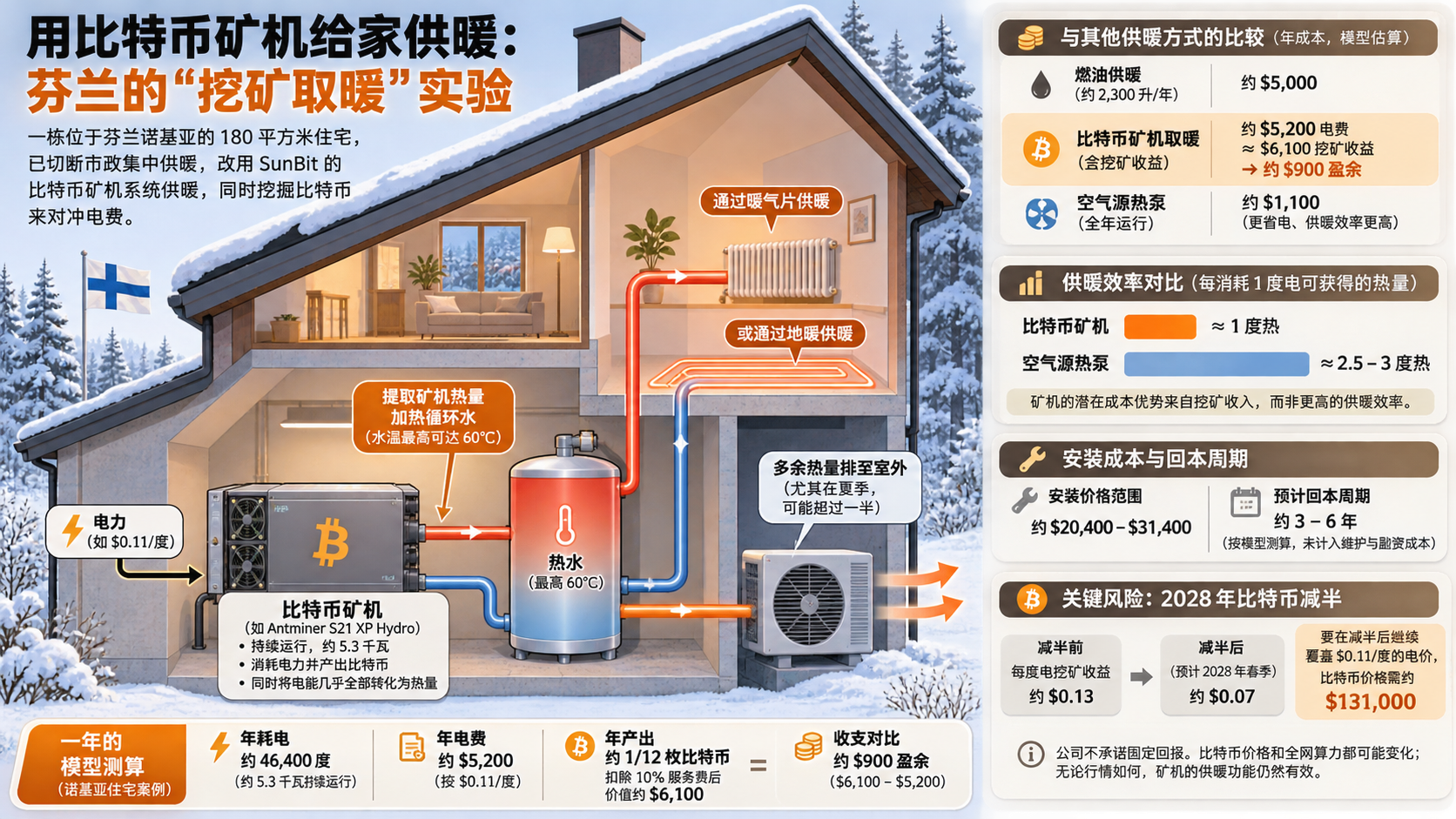
A home in Nokia, Finland, has disconnected from district heating and now uses a Bitcoin miner to heat its 180 square metres. As reported on November 9, 2026, it was one of 30 SunBit heating systems in operation. The central question is not whether a miner produces heat—it does—but whether the Bitcoin it earns can offset the electricity bill and the cost of installing it.
How the heating works
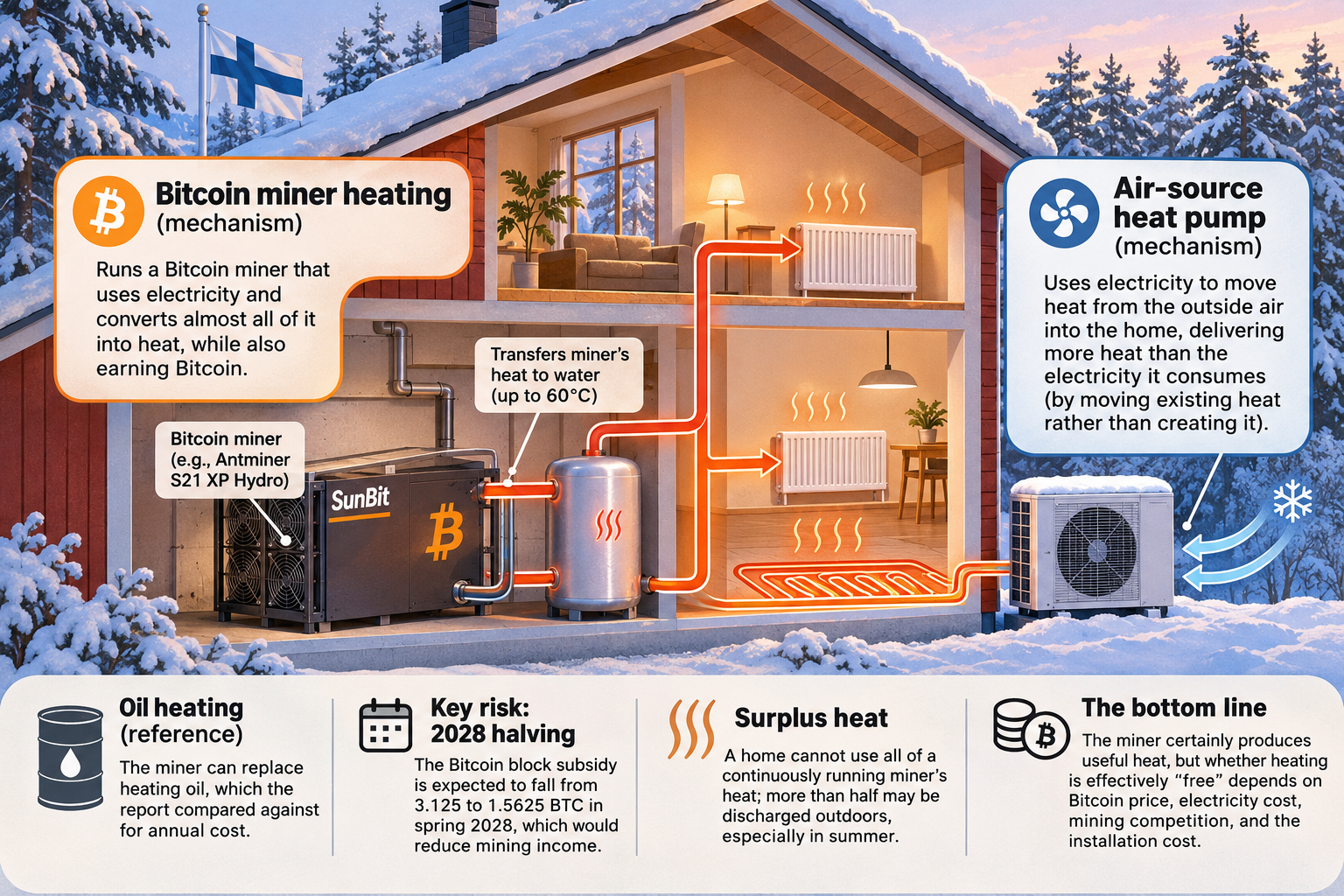
SunBit’s system transfers heat from a running miner into water, which can reach 60°C and circulate through radiators or underfloor pipes. The homeowner pays for the electricity and keeps the Bitcoin mined. CEO Elmeri Suomi told CoinDesk that all but one of the company’s operating systems were in Finland; its first overseas installation, in the Netherlands, replaced gas heating in 2025.
What the example assumes
For the Nokia home, SunBit modelled an Antminer S21 XP Hydro running continuously at about 5.3 kilowatts, or roughly 46,400 kilowatt-hours a year. At $0.11 per kilowatt-hour, the estimated annual electricity bill was about $5,200.
Assuming Bitcoin at $82,000 and network hashrate at 1,040 EH/s, SunBit estimated annual production of about one-twelfth of a bitcoin. After its optional 10% service fee, it valued the homeowner’s share at about $6,100—roughly $900 more than the electricity cost. A mining pool also charges 0.5%. These are modelled figures, not a guaranteed saving or a return on the equipment purchase.
SunBit compared the system with a home burning 2,300 litres of heating oil annually, at an estimated cost of about $5,000. On its assumptions, avoiding that oil bill and earning a mining surplus would repay an approximately $20,200 installation in about three and a half years, before maintenance and financing costs. The reported installation-price range was $20,400–$31,400, with estimated payback periods of three to six years.
Heat is certain; mining income is not
The miner turns roughly one unit of electricity into one unit of heat. SunBit said an air-source heat pump can deliver 2.5–3 units of heat per unit of electricity by moving heat from its surroundings. A miner’s possible cost advantage therefore comes from mining income, not greater heating efficiency. A home also cannot use all of a continuously running miner’s heat: the report said more than half may be surplus and discharged outdoors, particularly in summer.
The next expected Bitcoin halving, in spring 2028, is a further limit on the model. The block subsidy is expected to fall from 3.125 to 1.5625 BTC. SunBit’s payback calculator did not include that change. Holding its other assumptions fixed, the report calculated that mining revenue would fall from about $0.13 to $0.07 per kilowatt-hour, below the assumed $0.11 electricity price. It estimated that Bitcoin would need to reach about $131,000 for mining revenue to cover electricity after the halving under that model.
Suomi said the company does not promise a fixed return. Bitcoin’s price and mining competition can change; the useful heat remains, but the claim of effectively free heating depends on revenue assumptions that may not hold.