As reported on November 18, 2026, the answer was still uncertain. In a discussion hosted by Amelia of SmartX, three participants treated Bitcoin’s move toward $62,000 as a possible bottoming process, but disagreed on what would confirm it. Their price levels and market explanations were assessments, not verified signals or guarantees.
David, SmartX’s founder and CEO, said Bitcoin had fallen from roughly $78,000 to about $62,000—or briefly $61,900—in less than a week. He argued that the drop was not simply a liquidation of leveraged long positions. In his view, falling AI stocks may have led traditional financial institutions to sell liquid assets, including Bitcoin, to raise cash for equity positions and margin requirements. He also pointed to inflation and expectations of tighter monetary policy. These were his explanations for the sell-off, not established causes; the possible interest-rate increases discussed were expectations, not enacted decisions.
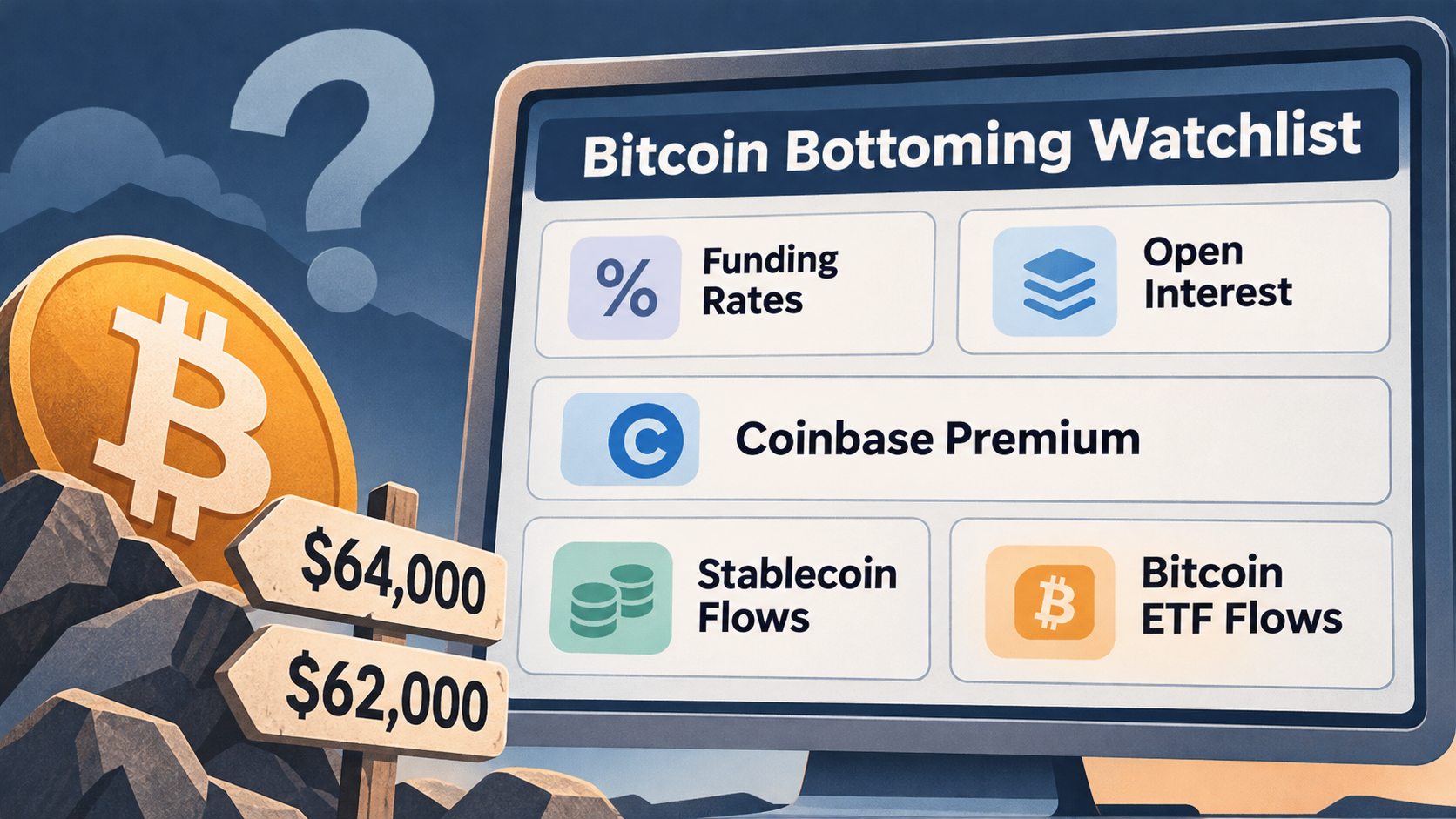
The Chain Research Society trader saw $62,000 as a second potential bottom after an earlier low near $57,000. He said that view still needed testing. He was watching funding rates and open interest for signs that leveraged long positions had cleared, while noting that the Coinbase premium appeared to be returning to normal. Continued stablecoin and Bitcoin ETF outflows, he said, remained sources of pressure. Holding around $64,000 and then $62,000 would strengthen his case against a new low, but he did not present that outcome as confirmed.
David was more cautious about calling a cycle turn. He said the broader cycle remained intact but that Bitcoin was still in a bear market. For him, trading sideways in the $60,000s for more than a month before rising would make a reversal more convincing.
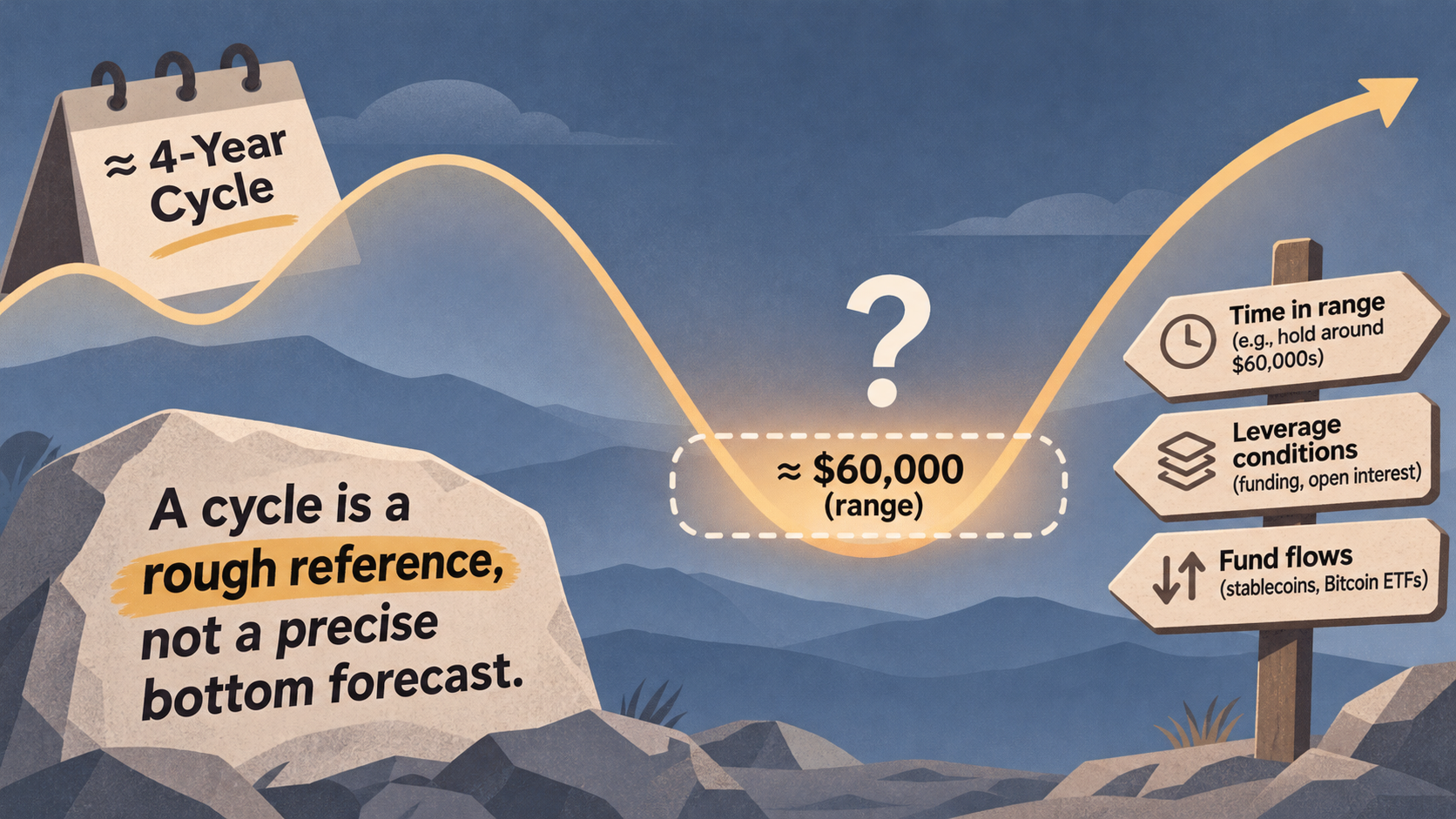
Lao Bai viewed roughly $60,000 as a probable bottom range, drawing on Bitcoin’s four-year cycle. But he also warned that many indicators he had used in an earlier cycle failed in the next one. That leaves the cycle as a rough reference, not a way to identify an exact low.
The shared limitation is straightforward: a price level can frame what to watch, but it cannot establish why Bitcoin fell or where it will go next. The participants’ differing tests—time spent holding a range, leverage conditions and fund flows—had not resolved that question at the original reporting date.