In a report published on November 19, 2026, Grayscale Research put Bitcoin’s one-year realized volatility at about 43%, down from roughly 64% a decade earlier and 81% five years earlier. It said the current figure was below the volatility of about 19% of S&P 500 constituent stocks.
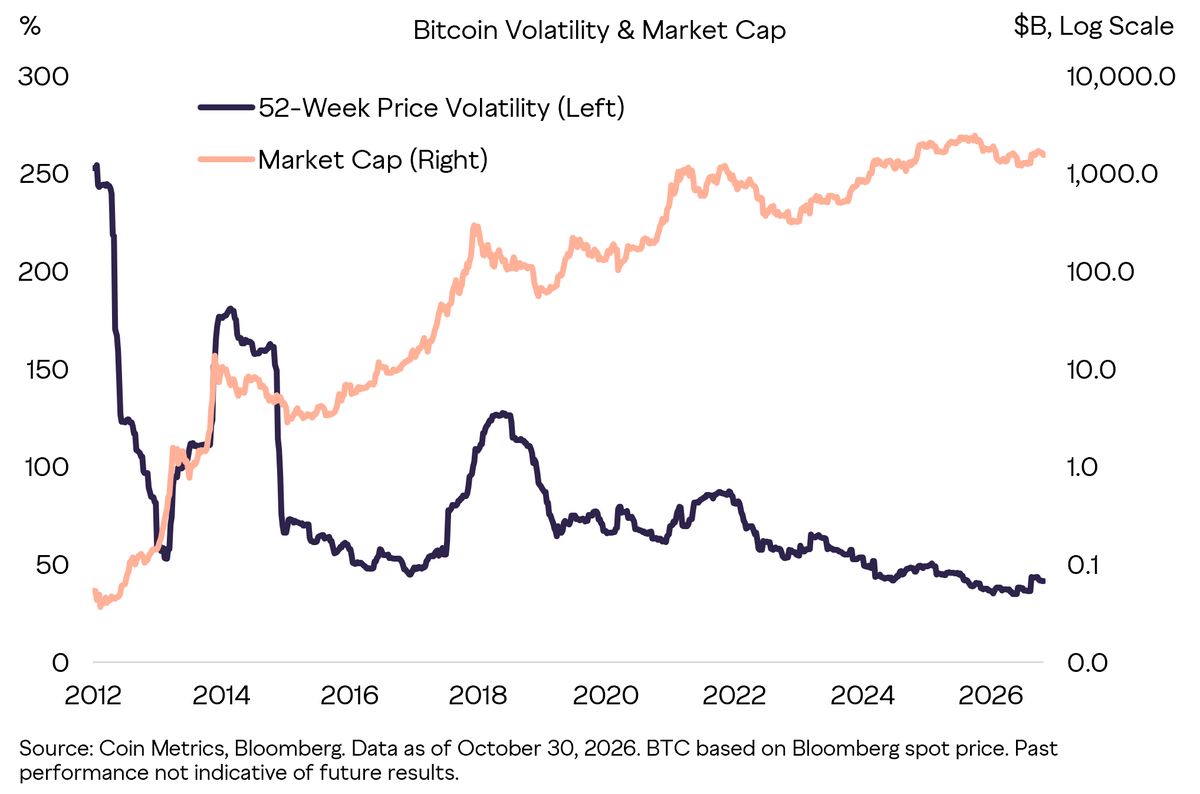
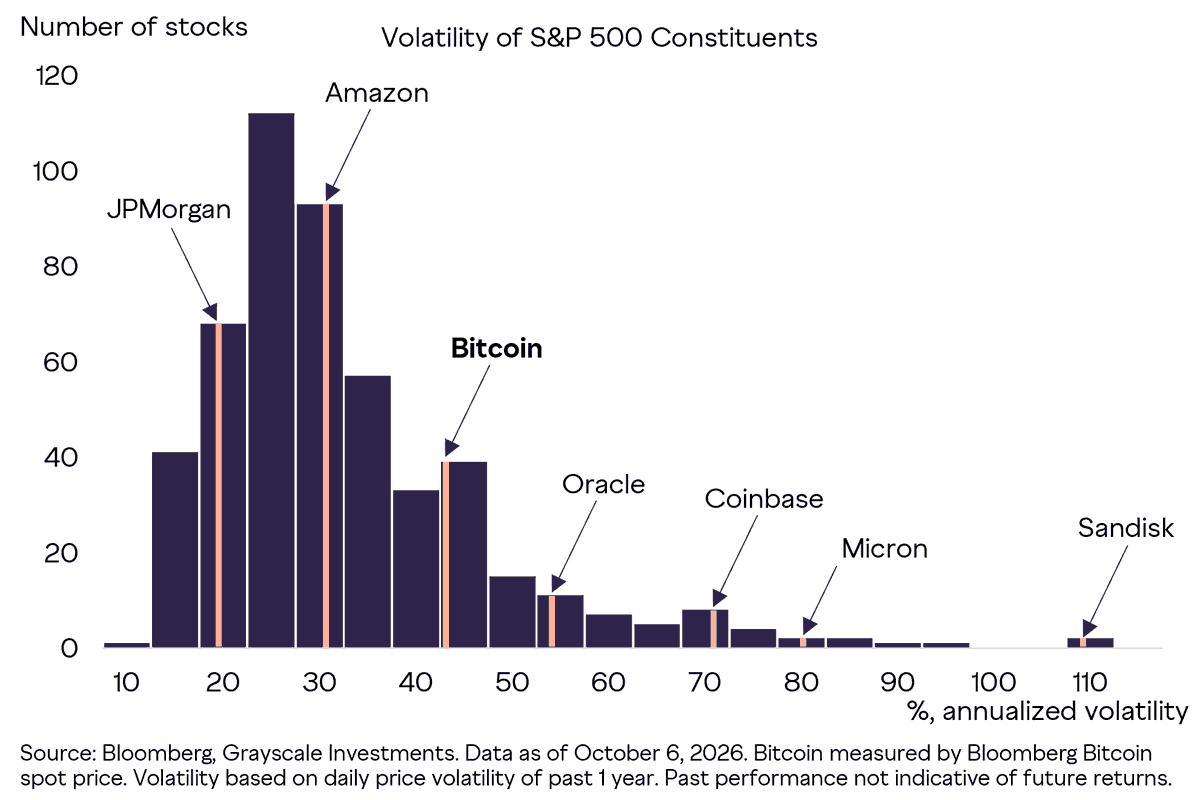
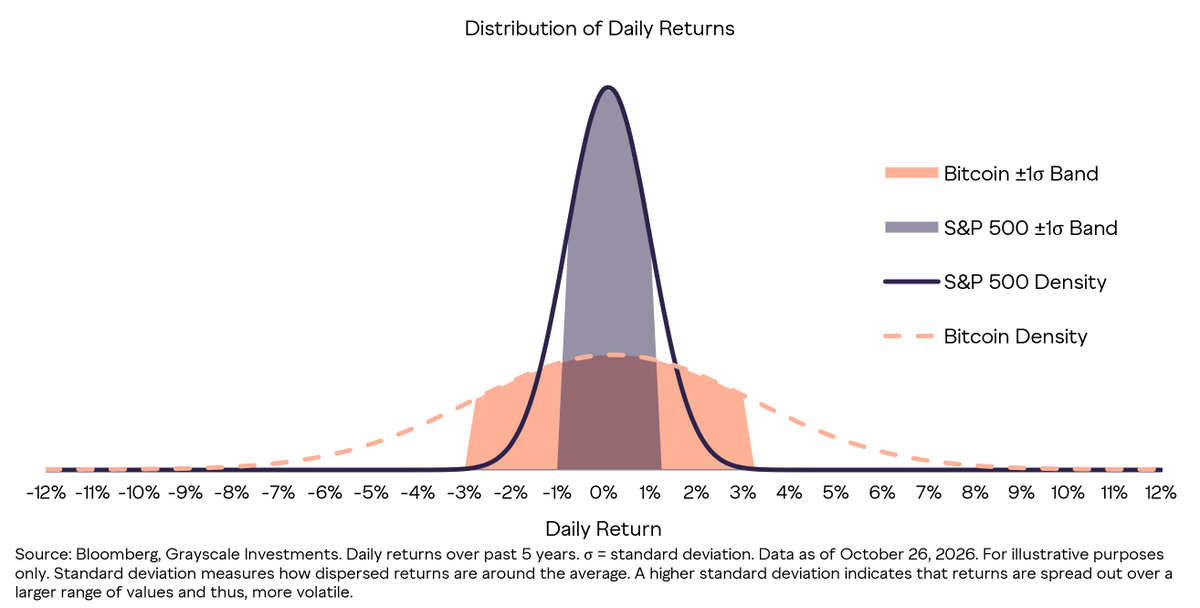
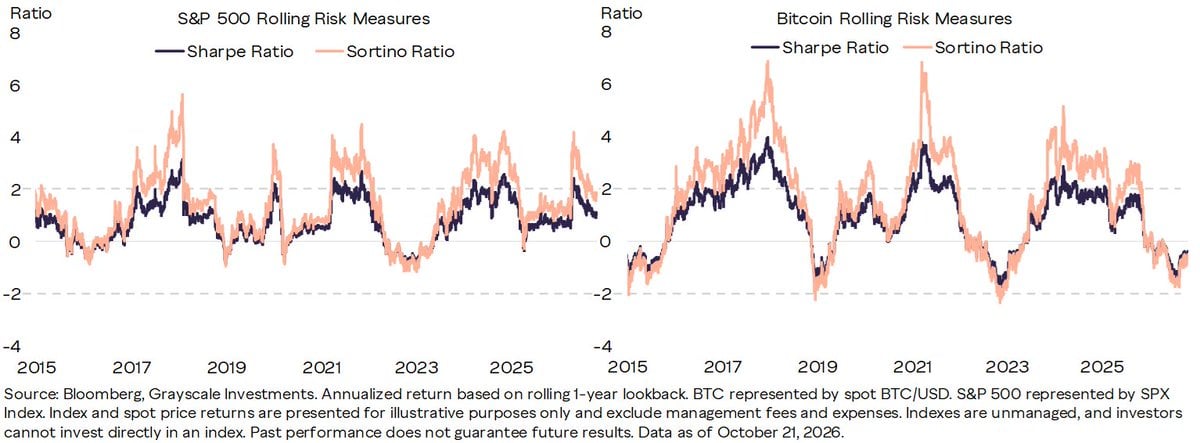
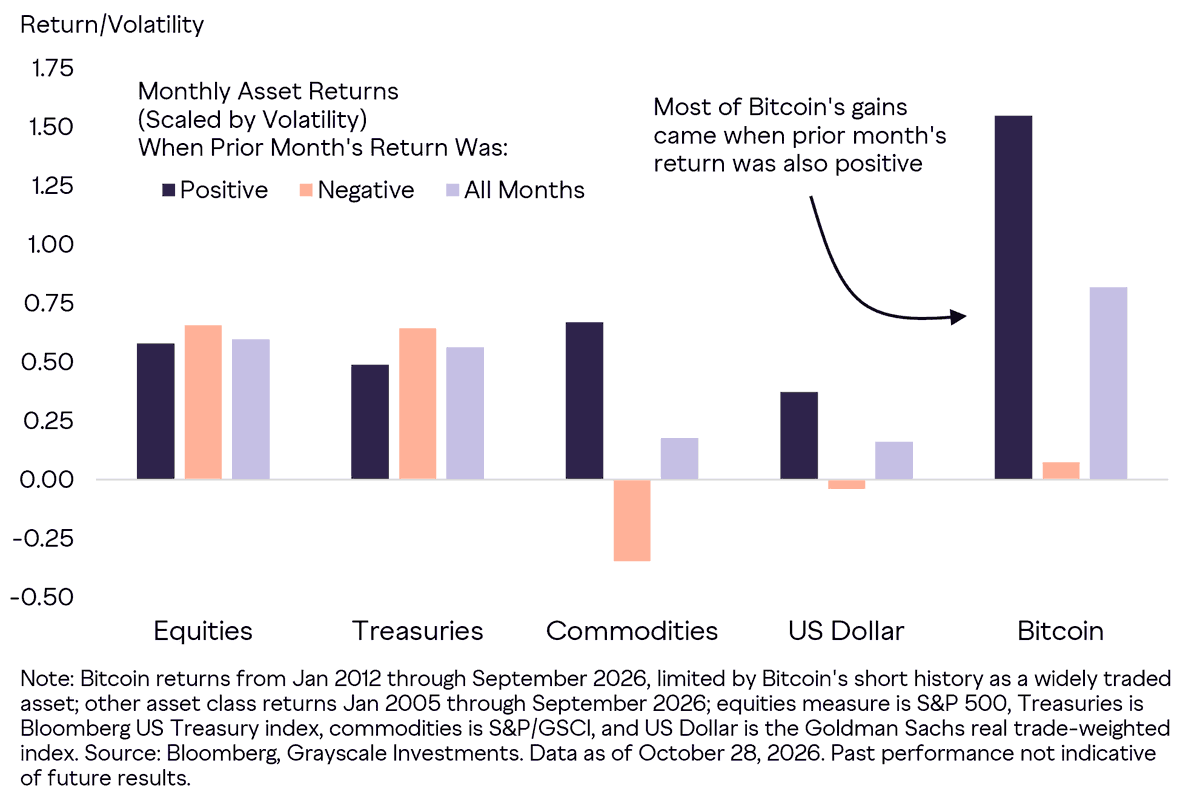
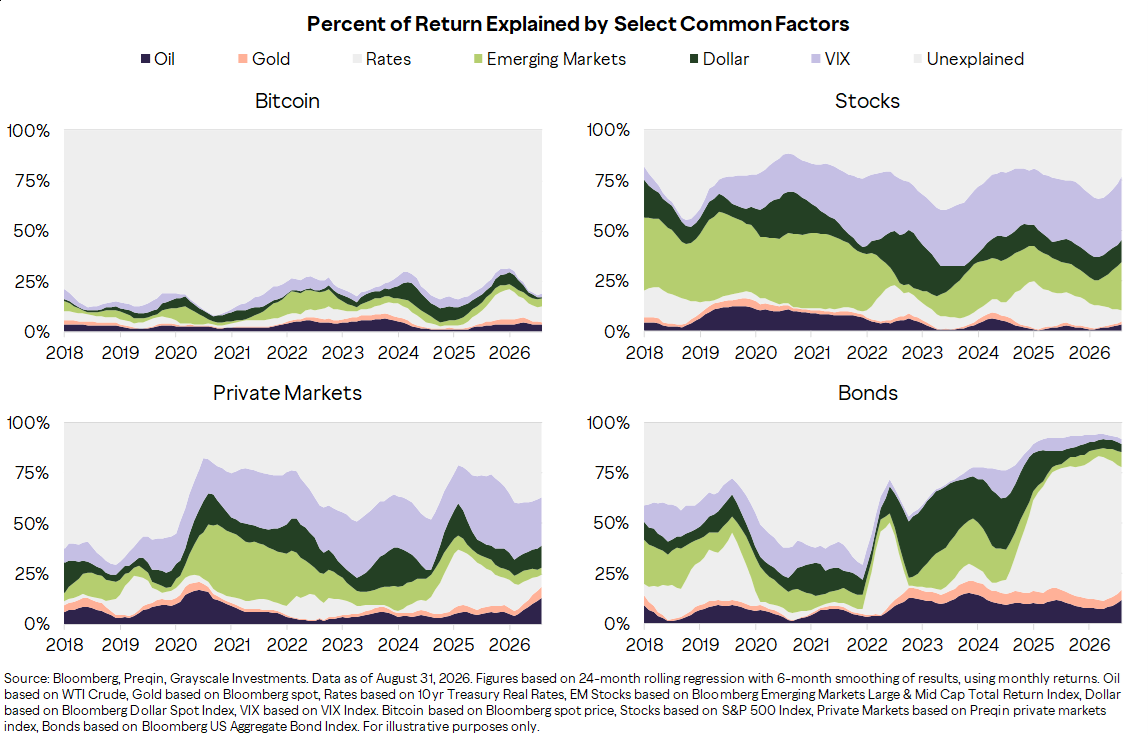
That comparison describes how much Bitcoin’s price has moved, not what it would do to a portfolio. Portfolio risk also depends on how an asset moves alongside existing holdings. Grayscale argued that traditional macroeconomic factors explain less of Bitcoin’s returns than they do of stocks’ returns, giving Bitcoin potential value as a diversifier.
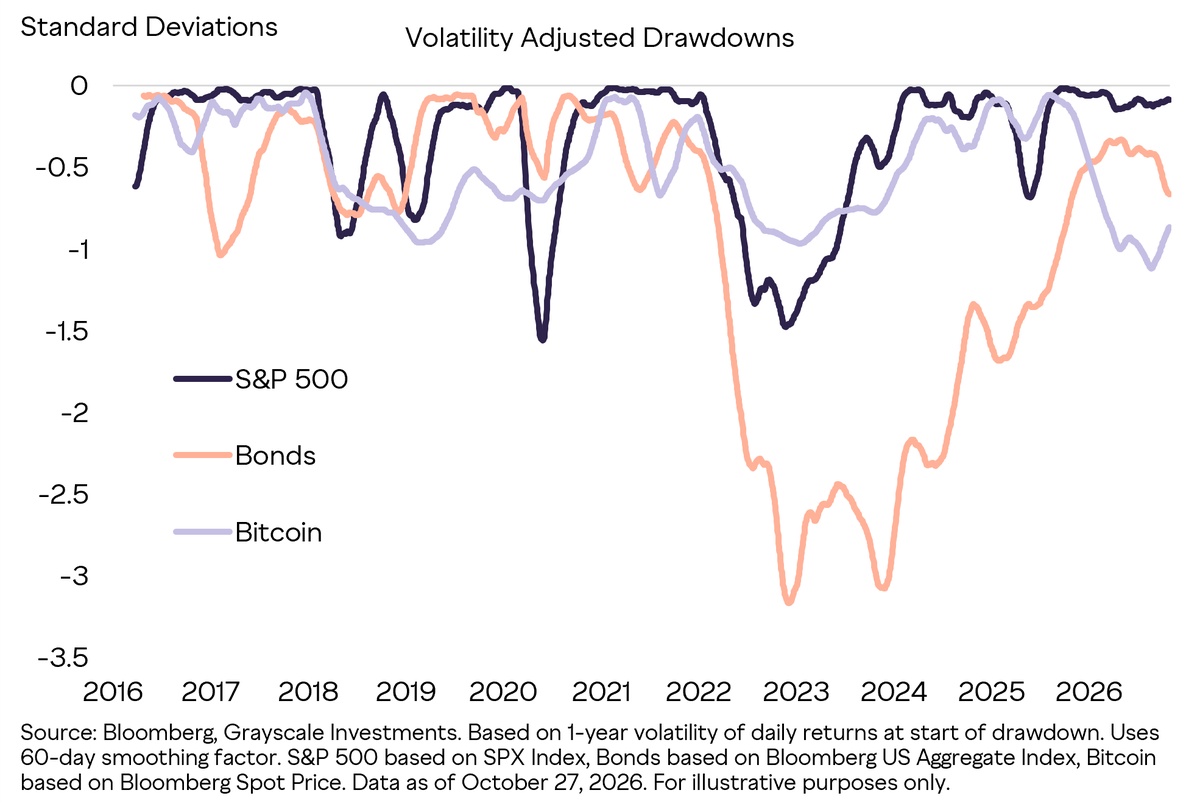
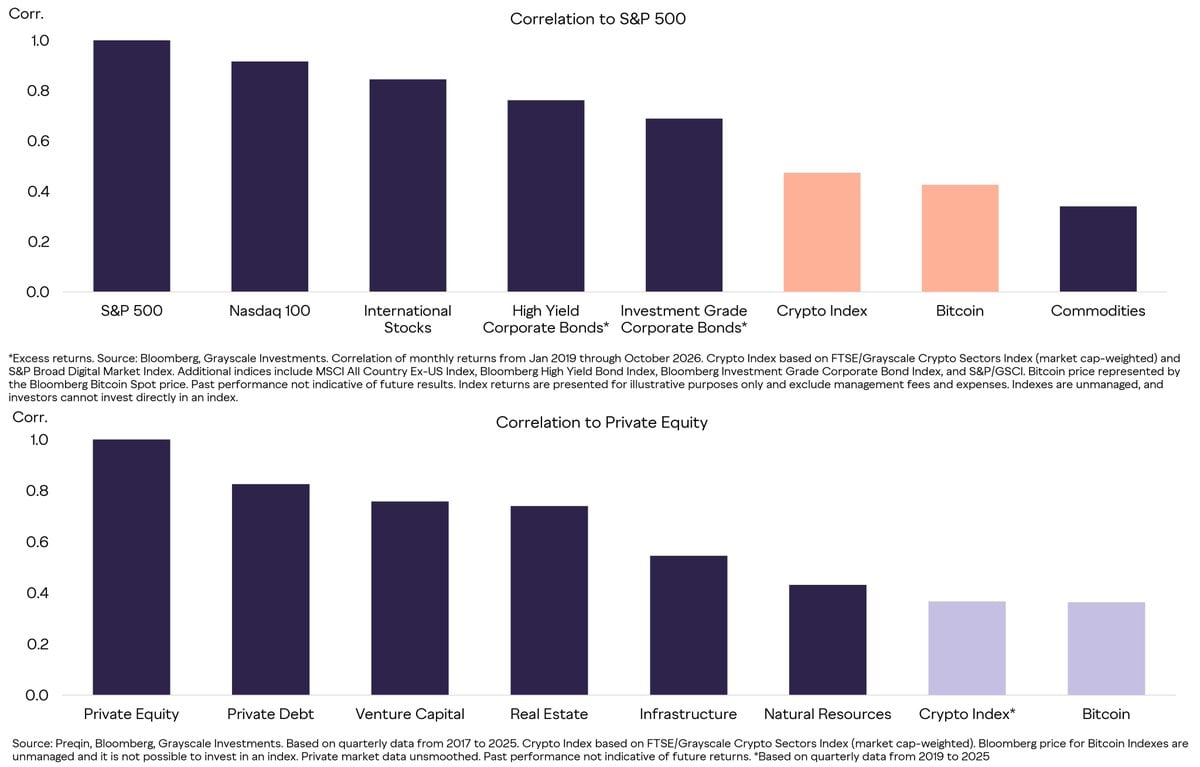
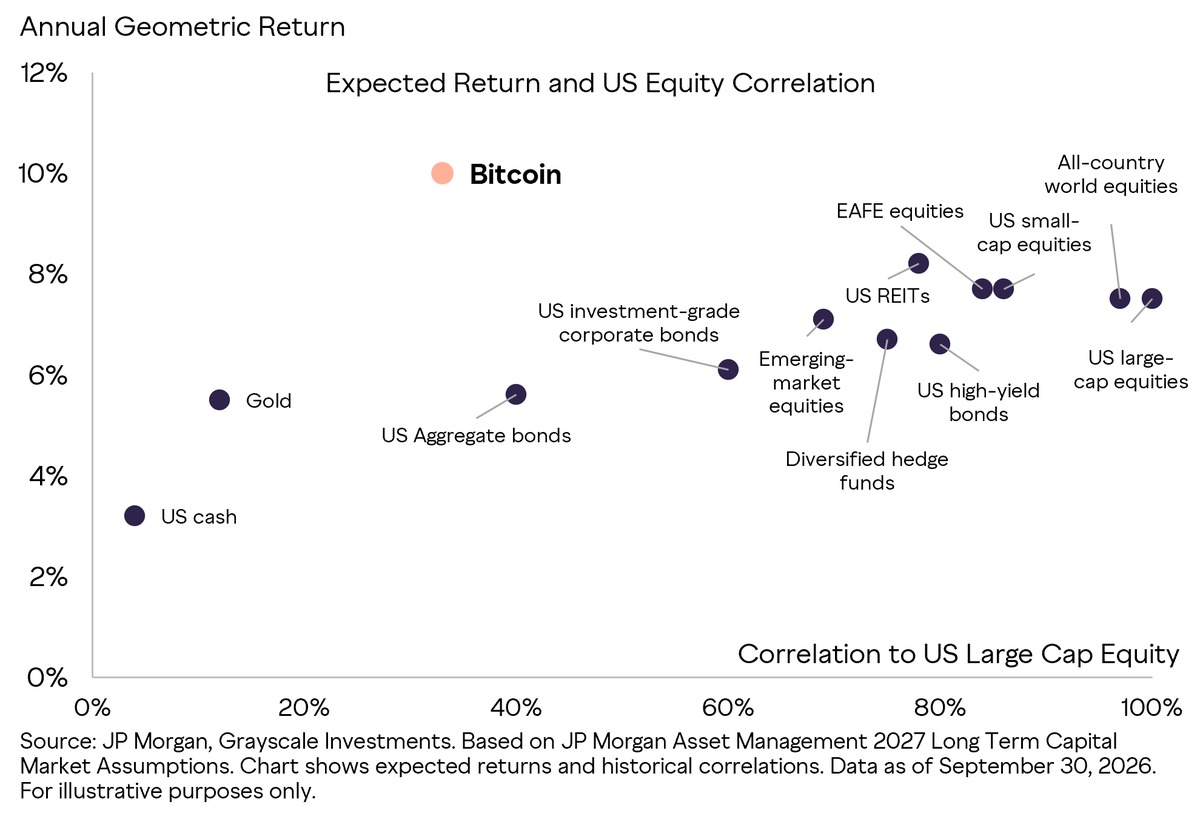
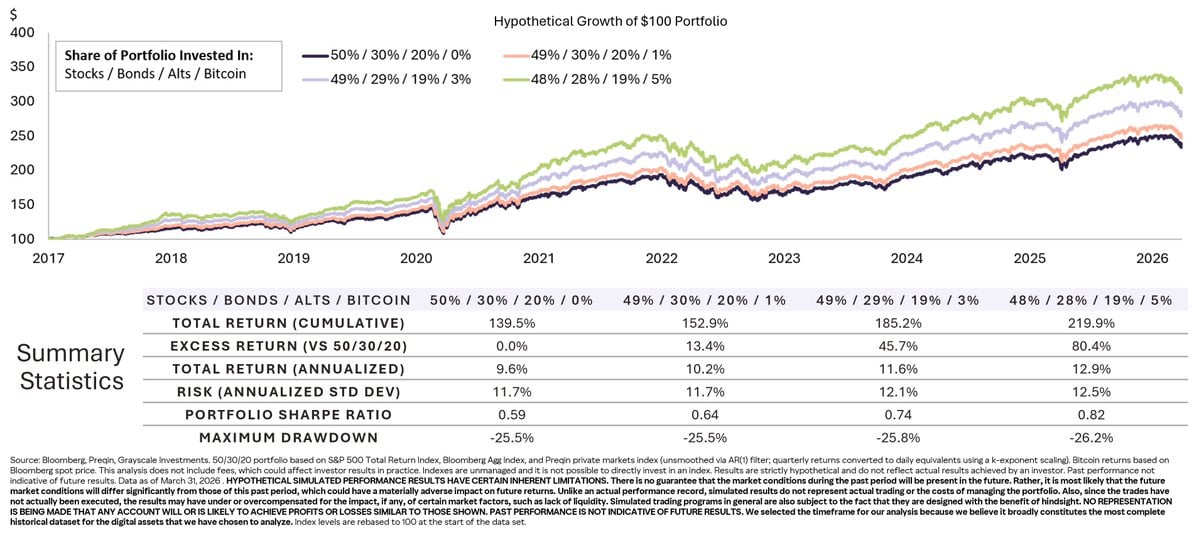
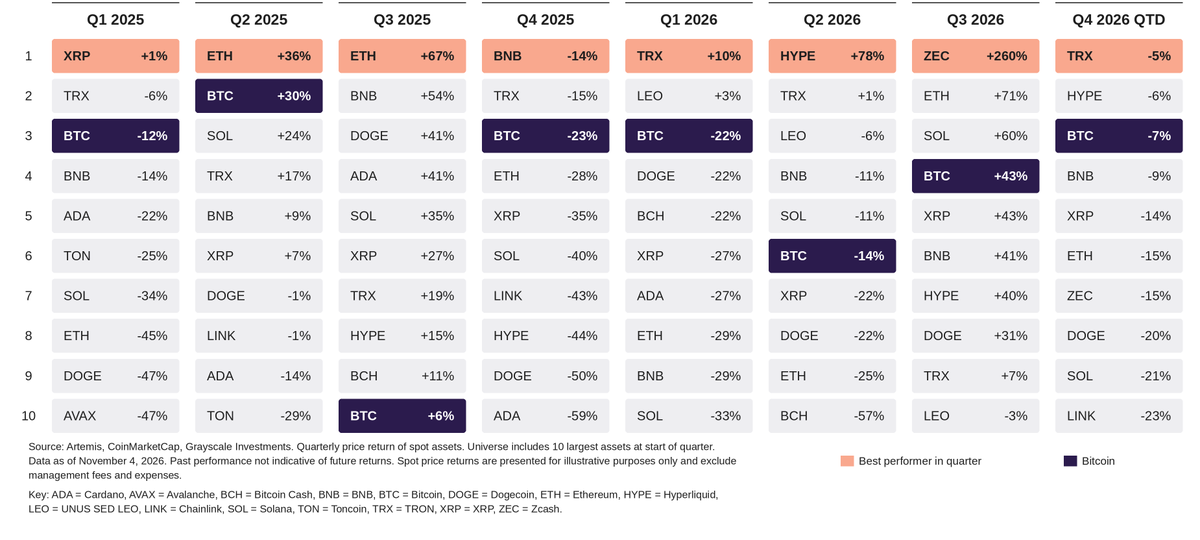
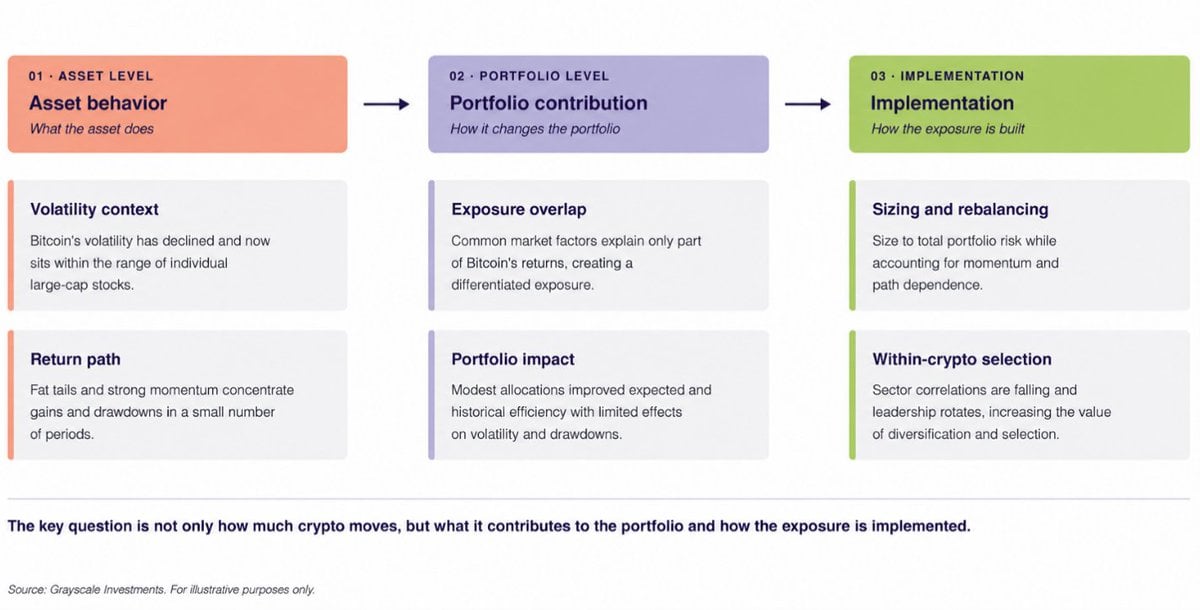
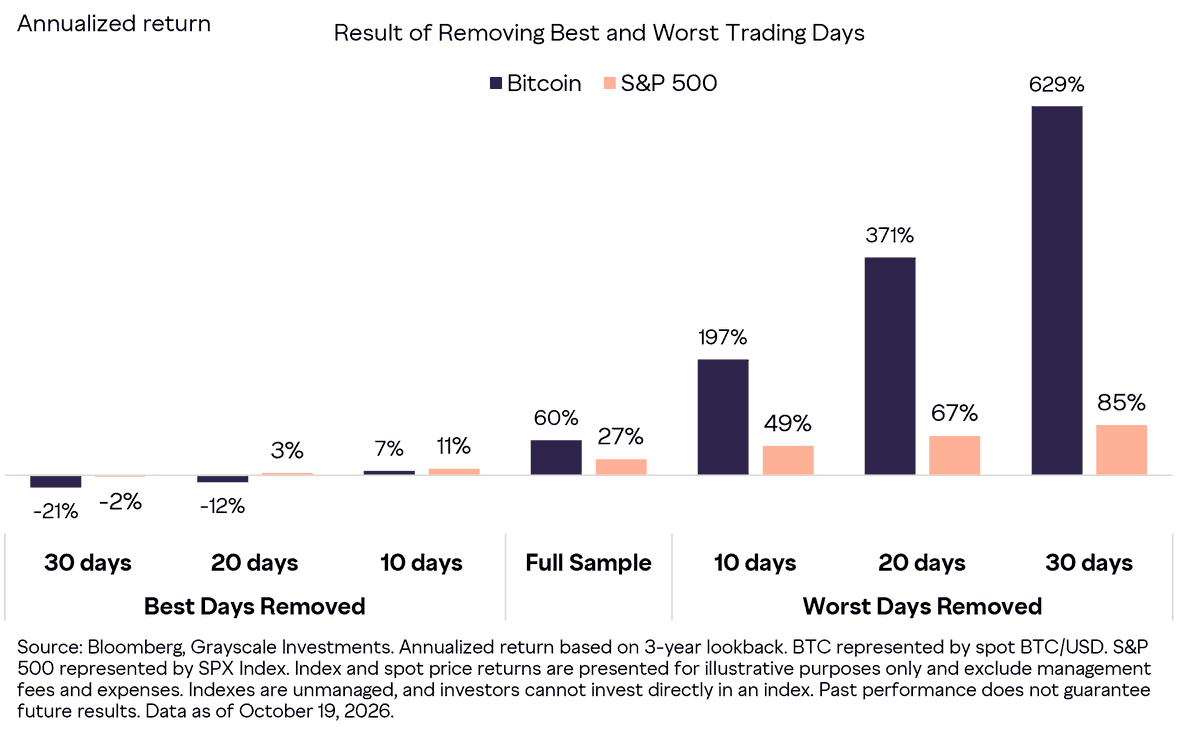
In Grayscale’s historical backtests, adding a 1%–5% Bitcoin allocation to a 60/40 stock-and-bond portfolio improved the Sharpe ratio without a comparable rise in overall volatility or maximum drawdown. Those are results under the model’s assumptions, not a prediction. The report also noted Bitcoin’s history of drawdowns exceeding 50% and returns concentrated in a small number of trading days. Lower measured volatility does not remove either risk, and correlations can change.