As reported on November 18, 2026, Bitcoin was trading around $64,000–$65,000 during Asian hours, after falling below $70,000 the previous week. HTX Research analyst Chloe argued that the removal of leveraged positions did not, by itself, show that the price was near a cycle bottom. Her central concern was whether spot buyers would return.
Chloe said U.S. spot Bitcoin ETFs had recorded more than $2 billion in cumulative net outflows since the start of November. A small net inflow on November 16 was not enough, in her view, to establish a reversal. She described long-position liquidations, thin spot liquidity and investors reducing risk as forces that could amplify one another. Even if derivatives leverage fell substantially, continued ETF outflows could leave spot demand too weak to support the price.
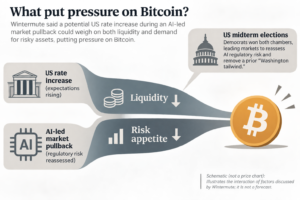
The wider backdrop also mattered to her assessment. Chloe said U.S. technology stocks and crypto had both come under pressure as attention shifted from monetary-policy expectations toward AI profits, institutional flows and trade policy. She noted that Nvidia’s latest quarterly results and next-quarter revenue guidance exceeded expectations, while doubts remained about large technology companies’ rising capital spending and the time needed to earn a return. Reports of Anthropic’s planned listing, alongside elevated U.S. Treasury yields, added to questions about how investors might allocate capital. Ether, she said, had fallen toward $1,800, with crypto-market sentiment in an extreme-fear range.
Chloe identified the November 18–19 APEC leaders’ meeting in Shenzhen as a potential catalyst: positive signals on trade, technology export controls or supply-chain cooperation might improve risk appetite. She cautioned that any lasting effect on crypto would still depend on institutional money returning.
Her short-term levels to watch—not established floors or forecasts—were $62,000–$63,000 for Bitcoin support, $60,000 as a psychological level if that area failed, and $65,000–$68,000 as an initial rebound range. She also pointed to 7,200–7,400 for the S&P 500. Her cautious conclusion was that a sustained rebound would require technology stocks to stabilize, ETF flows to turn positive and expectations for macro liquidity to improve together.
The distinction is between less forced selling and renewed demand. Liquidations can ease pressure, but their end cannot establish a bottom while spot buying remains uncertain.