As reported on November 18, 2026, three traders discussing a sharp fall in Bitcoin agreed on one point: a price near $60,000 was worth watching, but it was not a confirmed bottom. Their disagreement was about what would count as confirmation.
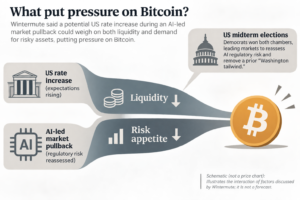
David, SmartX’s founder and CEO, said Bitcoin had fallen from roughly $78,000 to about $62,000 in less than a week. He attributed part of the selling to institutions raising cash or meeting margin needs as AI stocks declined: Bitcoin’s liquidity, in his view, made it an asset they could sell quickly. He still regarded the broader market as bearish. For him, a sustained period above $60,000 followed by a rise would make a cycle reversal more convincing than a quick rebound.
The trader known as 链研社 treated $62,000 as a possible second bottom, not an established one. He was watching funding rates, open interest and the Coinbase premium for signs that selling pressure was easing. He also cited continuing stablecoin and Bitcoin ETF outflows as reasons for caution. His view that Bitcoin might avoid a new low depended on it holding roughly $64,000–$62,000 over the following month; he also identified $57,000 as an earlier low in the move.
老白 put more weight on Bitcoin’s four-year cycle and considered the area around $60,000 a probable bottom range. But he said cycle timing was only a rough guide, not a way to locate an exact low. He argued for expressing uncertainty through position size rather than treating a bottom call as certain.
The durable lesson is narrower than any price forecast: Bitcoin’s liquidity can help make it sellable when other markets are under stress, while a familiar cycle pattern cannot prove that selling is over. The levels and signals these traders named were tests of their views—not guarantees.